
5 Places to Learn About Black History Along the Natchez Trace
The Natchez Trace Parkway is known for its scenic beauty and deep history – but woven into its 444 miles are powerful stories of Black resilience, creativity, labor and legacy. From archaeological sites to historic communities, these places invite travelers to slow down, listen and learn. Here are five meaningful stops where Black history comes into focus along the Trace.
1) Mount Locust Historic Inn (Mississippi – Milepost 15.5)
Mount Locust is one of the oldest structures along the Trace and a place where the realities of early American life are on full display. In the late 1700s and early 1800s, the inn operated with the forced labor of enslaved African Americans who farmed the land, tended livestock, and supported the daily operations of the stand. Today, interpretive exhibits and ranger programs help visitors understand the lives of the people whose work sustained this frontier outpost. It’s a quiet, reflective stop that honors stories too often left untold.
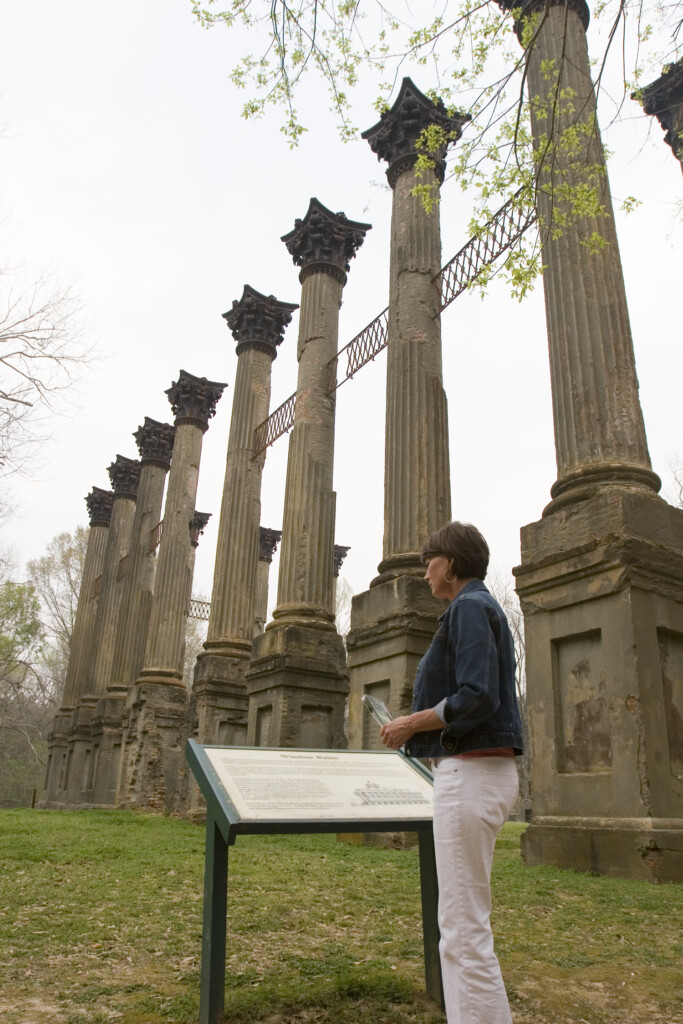
2) Windsor Ruins (Mississippi – Milepost 30)
The towering columns of Windsor Ruins are striking, but the site also represents the complex and painful history of plantation life in the Deep South. The mansion was built and maintained through the labor of enslaved African Americans who worked the surrounding plantation. While only the columns remain today, the site offers space to reflect on the people whose skills, strength, and endurance shaped this landscape. It’s a powerful reminder that the beauty of the Trace is intertwined with difficult histories.
3) Meriwether Lewis Monument (Tennessee – Milepost 385.9)
While best known as the final resting place of explorer Meriwether Lewis, this site also offers insight into the broader history of the early 1800s – a period shaped by the forced migration, labor, and resilience of Black people across the South. Interpretive panels help visitors understand the world Lewis traveled through, including the presence of enslaved labor along the Trace and the communities that formed in its shadow. The surrounding forest creates a contemplative setting for reflecting on the many lives connected to this historic route.
4) Colbert Ferry (Alabama – Milepost 327.3)
Colbert Ferry tells the story of George Colbert, a Chickasaw leader of Scottish and Chickasaw ancestry who operated a ferry and inn along the Tennessee River. His story also reflects a broader truth about the era: Colbert was among the Chickasaw planters who enslaved African Americans, and his nearby plantation relied on the labor of 150 people. Visitors can walk to the ridge where his home once stood or follow the Old Trace to a bluff overlooking the river – a place to consider the intertwined histories of Indigenous nations, Black labor, and early American travel.
5) Forks of the Road (Natchez, Mississippi)
Just outside the start of the Natchez Trace Parkway, this site was once one of the largest domestic slave markets in the United States, where thousands of enslaved people were bought and sold as part of the inland slave trade. Today, a marker and interpretive elements honor this painful chapter and serve as a reminder of the human cost of slavery in the region.
Bonus Stops:
1) Jackson, Mississippi
Jackson is home to some of the most significant sites connected to Black history and the Civil Rights Movement in the United States. Located near the Natchez Trace Parkway, the Mississippi Civil Rights Museum offers powerful, immersive exhibits that chronicle the fight for equality, justice and human dignity through firsthand accounts, historical artifacts, and multimedia storytelling. Together with the Museum of Mississippi History, the site provides essential context for understanding the struggles and achievements that shaped both Mississippi and the nation, making Jackson a meaningful stop for those seeking deeper insight into Black history along the Trace.
4) Clinton, Mississippi
The town of Clinton holds an important and sobering place in Mississippi’s Black history. In 1875, during Reconstruction, a rally led by State Senator Charles Caldwell drew more than 1,500 people, many of them freed men and their families. Violence erupted in the days that followed, resulting in the deaths of more than 50 people, most of them Black men, in what became one of the bloodiest racial massacres in the state’s history and a catalyst for the Mississippi Plan. Today, Clinton is working to acknowledge this past through the development of an interpretive center at the site of the Clinton Riot.
3) Nashville, Tennessee
Located near the northern terminus of the Natchez Trace Parkway, Nashville is home to the National Museum of African American Music. This 56,000-square-foot museum highlights the profound influence Black artists have had on shaping more than 50 music genres, from spirituals and blues to jazz, gospel, R&B and hip hop. Through interactive exhibits and immersive storytelling, the museum offers a dynamic look at how African American music continues to shape culture in Nashville and beyond.
Exploring the Full Story of the Trace
Black history is woven into the fabric of the Natchez Trace Parkway. These five stops offer meaningful opportunities to learn, reflect and connect with the people whose lives shaped this historic corridor. Whether you’re planning a day trip or a multi‑state journey, the Trace invites you to explore with curiosity and care.


