

Ride Safe, Ride Smart: Cycling Tips for the Natchez Trace Parkway
With gentle curves, stunning scenery, and no commercial traffic, the Natchez Trace Parkway has earned its reputation as one of America’s premier cycling destinations. Spanning 444 miles through Mississippi, Alabama, and Tennessee, the Trace gives cyclists a rare opportunity to ride through rolling hills, forested paths, and peaceful waterways, uninterrupted by the stop signs, stoplights, and congestion of a typical highway.
Whether you’re planning a multi-day adventure or a casual afternoon ride, a little preparation goes a long way. Here’s what you need to know to ride safely and smart on the Natchez Trace Parkway.
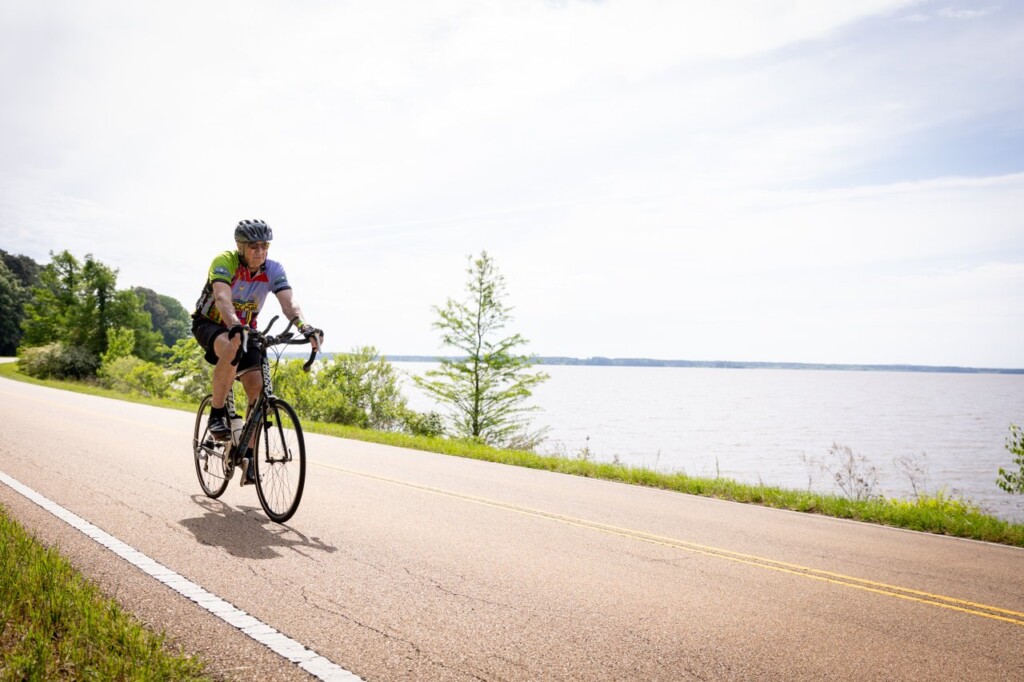
Plan Your Route Before You Go
One of the best things about cycling the Trace is how much there is to discover along the way: scenic overlooks, historic sites, picnic areas, and short trails are spread throughout the entire 444 miles. Before you head out, take time to map where you’ll stop for water, rest, and sightseeing.
While pull-offs and rest areas are plentiful on the Parkway, food, lodging, and supplies are found in the 19 communities located just off the route rather than directly on the road. Planning your daily mileage around those communities, typically between 30 and 60 miles per day, lets you end each day with a meal and a comfortable place to sleep. If you’d prefer to camp, the Parkway has five bicycle-only campgrounds along the route, plus additional campgrounds nearby.
Use the Scenic Trace interactive trip planner to map your stops, download visitor guides, and build an itinerary around your pace and interests.
Know the Parkway Rules
The Natchez Trace Parkway is managed by the National Park Service, and cyclists share the road with vehicles for the entire length of the route. The full 444 miles is officially designated as a bicycle route, and numerous signs instruct motorists to share the road, but riders should still follow all posted rules and traffic laws.
Cyclists are required to ride single file and stay to the right. Obey speed limits, stop at intersections, and follow all signage to keep the experience safe for everyone on the road.
Visibility tip: Wear bright or reflective clothing so drivers can spot you easily, especially on curves. Front and rear bike lights are strongly recommended if you’re riding in early morning, late afternoon, or any low-light conditions.
Stay Alert for Wildlife and Curves
The natural beauty of the Trace is a big part of what makes it so special, and it’s also a reason to stay alert. Wildlife appears unexpectedly along the roadway, and the Parkway’s signature rolling hills and curves can limit sightlines for both cyclists and drivers. Keep your head up, your speed controlled on descents, and your ears tuned to what’s around you.
Notable Stops to Add to Your Ride
The Trace rewards cyclists who slow down. Here are a few standout stops worth building into your route:
Cypress Swamp, Milepost 122: A short, shaded boardwalk loop through striking bald cypress and tupelo trees. It’s an easy break that feels a world away from the road.
Colbert Ferry — Milepost 327.3: River views, picnic areas, and a bicycle-only campground make this a popular overnight spot. The site has been a crossing point for travelers for centuries. Chickasaw leader George Colbert operated a ferry and inn here in the early 1800s.
Tishomingo State Park — Milepost 305: Rock formations, trails, and a swinging bridge make this Alabama stop a favorite for cyclists who want a nature-heavy break mid-ride. It’s also a good staging point for the wooded stretch between here and Tupelo.
Frequently Asked Questions
Is the Natchez Trace Parkway good for beginner cyclists? Yes. The Parkway’s lack of commercial traffic, no stop signs or intersections, and 50 mph speed limit for vehicles make it one of the most accessible long-distance cycling routes in the country. Beginners typically start with shorter day segments, while experienced riders tackle the full 444 miles over several days.
Where can cyclists stay along the Natchez Trace Parkway? There are five bicycle-only campgrounds on the Parkway itself, plus additional campgrounds nearby. Cyclists who prefer a bed will find hotels, motels, and bed and breakfasts in the communities along the route, many of which are cycling-friendly and accustomed to Trace riders.
What should cyclists bring on the Natchez Trace? Water is the most important thing to carry; services are spaced out, and restrooms with water are available roughly every 20 miles on the Parkway. Pack snacks, a basic repair kit, and a route plan. Reflective gear and lights are strongly recommended regardless of when you plan to ride.
Can you ride the full Natchez Trace Parkway by bike? Absolutely. Completing all 444 miles is considered a bucket-list ride for long-distance cyclists. Most riders plan for 7–10 days, covering between 30 and 60 miles per day.
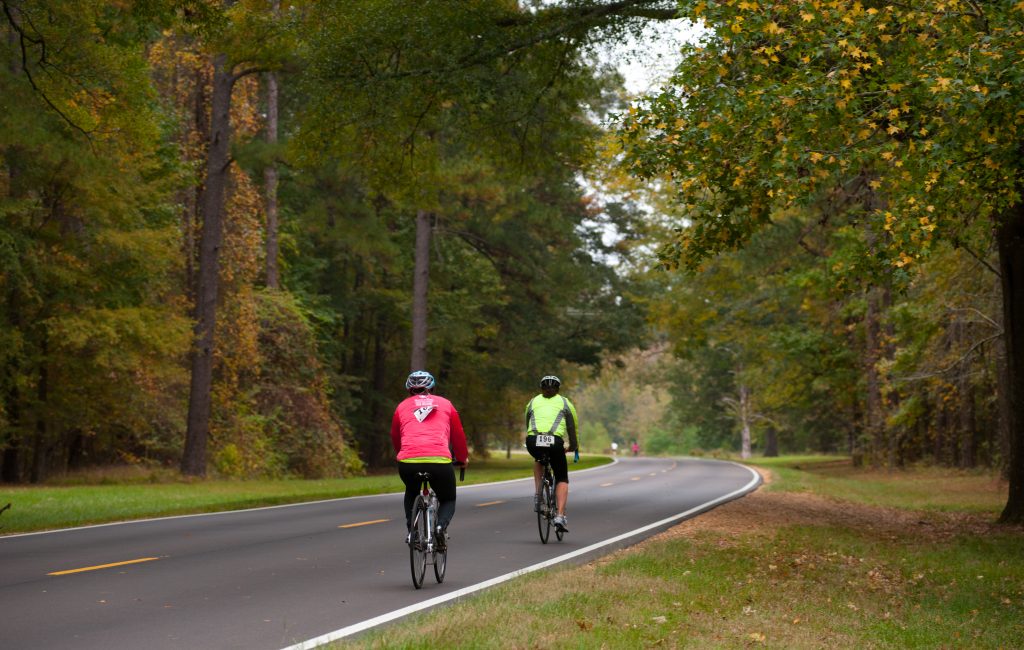
Ready to Ride?
The Natchez Trace Parkway offers something rare: a long-distance route through protected, billboard-free scenery with no commercial traffic and a historic landscape that unfolds mile by mile. With the right preparation and a focus on safety, cycling the Trace can be one of the most memorable ways to experience this All-American Road.


