

The Natchez Trace Parkway: Telling America’s Story as the Nation Turns 250
As the United States approaches its 250th birthday in 2026, communities across the country are reflecting on the people, places, and pathways that shaped the nation. The Natchez Trace Parkway offers a unique way to experience that history, tracing a route that existed long before independence and continues to tell the story of America’s growth, challenges, and resilience.
A Path That Predates the Nation
Long before the Declaration of Independence was signed in 1776, the Natchez Trace served as a network of Indigenous trails used by Native nations, including the Chickasaw, Choctaw, and Natchez. These paths connected villages, trade centers, and cultural landscapes across what are now Mississippi, Alabama, and Tennessee.
The Trace reminds us that America’s story began long before the nation itself was formed. Learn more about the origins and long history of the route on the Natchez Trace Compact.
About the Trace page: https://www.scenictrace.com/about-the-trace/

The Trace in Early American Life
After the American Revolution, the Natchez Trace became one of the most important travel corridors in the young United States. Traders floated goods down the Mississippi River to Natchez and New Orleans, then made the long journey back north on foot or horseback along the Trace. Inns known as “stands” offered shelter and supplies, helping to shape early frontier communities and commerce. Many of these stories are shared today through historic markers and pull-offs highlighted on the Compact’s Interpretive Sites page: https://www.scenictrace.com/what-to-do/interpretive-sites/
Stories of Conflict, Labor, and Movement
The Natchez Trace also reflects the complex realities of early America. The route intersects with the forced removal of Native nations, the institution of slavery, and the labor of African Americans, enslaved and free, who played vital roles in transportation, agriculture, and settlement.
These layered histories are central to understanding the nation’s past and are explored through the Compact’s Cultural Heritage resources: https://www.scenictrace.com/what-to-do/cultural-heritage/
From Historic Path to National Parkway
In the 20th century, efforts to preserve the Natchez Trace transformed an ancient route into a protected scenic roadway. Built in part during the Great Depression and later designated a unit of the National Park Service in 1983, the parkway preserves both natural landscapes and historic sites for future generations to enjoy. The evolution of the Trace from trail to parkway is also outlined on the Compact’s About the Trace page:
https://www.scenictrace.com/about-the-trace/
The Natchez Trace at America’s 250th
America’s 250th birthday invites reflection on where the nation has been and where it is going. The Natchez Trace Parkway embodies that journey, offering travelers a chance to experience centuries of American history in a single drive.
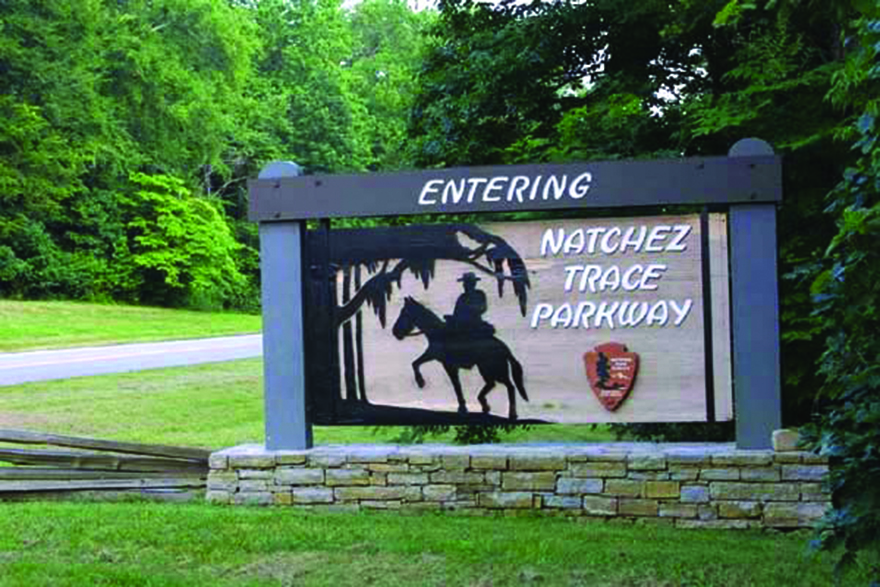
As communities across the country commemorate this milestone, the Natchez Trace Compact continues to share stories that connect the past to the present through its blog and ongoing features: https://www.scenictrace.com/blog/
A Living Link to America’s Past
Driving, biking, or walking the Natchez Trace Parkway is more than a scenic experience—it is a connection to the stories that shaped the nation. As America approaches its 250th birthday, the Trace invites travelers to slow down, explore deeper, and reflect on how this historic path continues to connect the past, present, and future.


